My Jackie

Every April 15th, Major League Baseball celebrates Jackie Robinson Day but due to Covid, that celebration had been moved to August 28th, and it couldn’t have fallen during a more appropriate time.  Although the date itself is significant in Jackie’s history as the day that he met Branch Rickey in 1945 to discuss joining the Dodgers, it proved to be a day when racial injustice was again the main topic of the day and fitting that it was also the 65th anniversary of the lynching of 14 year old Emmett Till. Protests have sparked across the county this week after the August 23rd shooting of Jacob Blake in Kenosha, Wisconsin. Rioting began that night as the Kenosha County Courthouse, and the violence continued into Tuesday, when an armed “militia” arrived to “protect their city”. Video shows that the police department encouraged the vigilantes while the department publicly said that they were not invited and not welcomed. The violence would lead to 17 year old Kyle Rittenhouse from Illinois shooting three protestors, killing two. It has been reported that after the shootings Rittenhouse tried to turn himself into police, and even approached them with his hands up. The police did not stop or question him even as other witnesses were telling them that he was the shooter.

Outraged, players from the NBA and WNBA protested by not playing their games scheduled for that evening as a sign of solidarity with black communities, by using their platforms to raise awareness to this ongoing problem, and demand change. Six Major League Baseball teams, the Reds, Brewers, Mariners, Padres, Giants, and Dodgers also decided not to play. Although the Oakland Athletics would decide to not play their Thursday night game, it did not go unnoticed that the team from a city with such a large black population, and historically known for its vocal and demonstrative fights for social justice, did not postpone their game on Wednesday night.

On Friday Jackie Robinson day was celebrated across the league. Every team wore the #42 on their jerseys as a remembrance, and even more so players told their stories of racial inequality and injustice. I personally learned about Posy Lombard, mother of Dodgers first base coach George Lombard, and her civil rights activism throughout her life until her tragic death in 1985. Oddly enough the Athletics found themselves not playing again as the Astros, whose previous two games had been postponed due to Hurricane Laura, chose not to play their game Friday night as it was their first opportunity to show their support for the Black Lives movement. In a memorable pre-game ceremony, the two teams went on to the field and placed an Astros and an A’s #42 jersey in the batter’s box with a Black Lives Matter shirt on home plate as they observed a moment of silence before exiting the field. Coincidentally Jackie Robinson Day came to a close with the news that actor Chadwick Boseman died after battling colon cancer for four years. Boseman will be most remember for his role as Black Panther, but he is also known for portraying Jackie Robinson in the 2013 Brian Helgeland film, “42”.  All of this took place while Rittenhouse, who was charged with first degree intentional homicide, first degree reckless homicide, and two counts of first degree recklessly endangering safety, and possession of a dangerous weapon by a person under the age of 18, had his extradition hearing originally scheduled for Friday the 28th pushed back to September 25th.

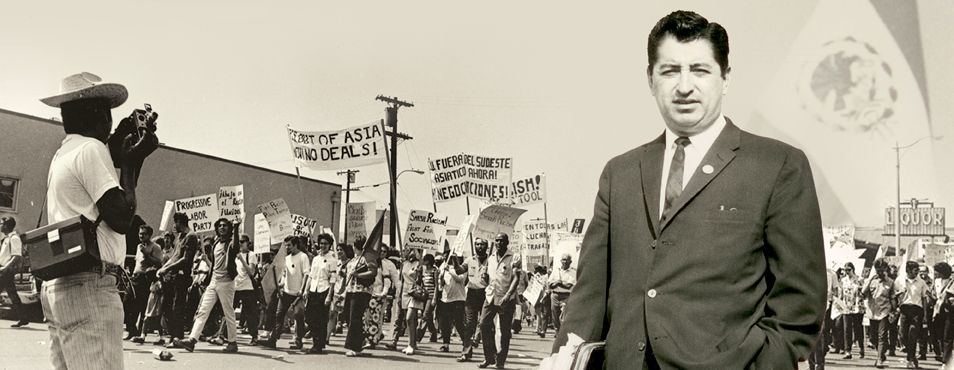
On Jackie Robinson Day, La Vida Baseball (@lavidabaseball) asked in a tweet, “What does this day mean to you”? I had never considered the importance of this day and how it affected me. I kept the question in the back of my mind as I went about my day when it finally hit me that Jackie Robinson was bigger than breaking the color barrier in baseball. I replied to the tweet in this manner, “As we approach the 50th anniversary of the death of Ruben Salazar, Jackie Robinson reminds me that there are many more Jackie Robinsons in many different fields. As a Mexican-American striving to be a journalist that matters, I’m remembering Salazar and his contribution for us”. Ruben Salazar was a Mexican-American writer for the Los Angeles Times, and today, August 29th, marks the 50th anniversary of his death while covering the National Chicano Moratorium March in 1970.

The March began as a protest over the disproportionate number of Latinos who served and were killed during the Vietnam War.  Los Angeles County Sheriff Deputies were already on the scene for the rally after the march, and as the protest became more violent, Salazar went to take a break and get a drink at a local bar. As the rioting escalated, the Sheriff’s Department bussed in untrained cadets for backup, and a tear gas projectile flew into the bar striking Salazar in the head and killing him. The death was ruled a homicide, as many believed it was actually an assassination, but Deputy Tom Wilson was never prosecuted. Gustavo Arellano of the Los Angeles Times recently described Salazar’s writing as “the Chicano version of the Gnostic Gospels”. He was a pioneer in journalism for Mexican-Americans, our Jackie Robinson if you will.

Salazar’s headlines could fit into any news story we read today, and while much has changed since his death, we are still dealing with the same problems we faced as a nation 50 years ago; war, police brutality, racial tension, and civil unrest, it all remains the same. The 70s would go on to produce a new wave of Mexican-American activists who challenged our values of the past. The Chicano Power Movement was strong leading to many more Mexican-American voices joining forces to be heard, to include the Brown Berets who were inspired by the Black Panthers to bring attention to police brutality against Latinos. So why aren’t more people today talking about Latinos killed by police? They represented 16% of those shot by police in 2016, second only to blacks at 25% according to the U.S. Bureau of Justice Statistics. I’m not trying to cry foul, but to point out that Latino civil rights issues are too focused on immigration issues, and mainly that of the undocumented. Unfortunately, immigration only makes the issue of police brutality that much more difficult for Latinos as the media seems to only focus on black and white incidents. This in turn takes the focus away from all other cases of police brutality, and if the focus is small, that can only mean that the attention given to other injustices will also be small.

Baseball, with all the good its trying to do now by supporting Black Lives Matter, and their programs to make the game more accessible to inner city kids, still has a problem with minorities. On August 9, 2020, Jim Passon (@PassonJim) tweeted stats showing the teams that had the lowest percentage of plate appearances by players born outside of the United States. While teams like the Yankees, Padres, and Giants boasted numbers over 30%, the Rockies had 3.9%, while the Mariners had 0% as of August 9, 2020. Some speculate that this is intentional by Mariners ownership and cite the gender and racial discrimination case filed by their former high-performance director Lorena Martin.

Minorities all have a right to equal justice, and if you have a problem with what is going on in our country, think about this quote by Ruben Salazar, “The point is that whatever one may think of the merits of either side of these cases, grassroot movements such as the school walkouts bring out these important overall issues. And that is what democracy is about”. Salazar is remembered as a martyr, but we must rediscover, and remember him as a reporter.

Stone to Mayeux to Nakken

The love of baseball spans generations and with that ethnicity, social status, and gender. Alyssa Nakken was added to the San Francisco Giants staff in January 2020 making her the first woman to be named as a full time coach for a Major League team. She further made history on July 20, 2020 when she replaced Antoan Richardson as the first base coach for the San Franciso Giants becoming the first woman to coach on the field of a Major League Baseball game. This is the most recent chapter for women in baseball as women have been playing baseball for years, but it feels like no one seemed to notice until Penny Marshall made, “A League of their Own” in 1992.

The All-American Girls Professional Baseball League (AAGPBL), which is featured in the film, existed from 1943-1954 and came into existence during World War II when men were being sent to war, and Major League team owners were looking to try and replace their lost income by keeping baseball fresh in the public’s eye.  The AAGPBL paved the way for women’s professional sports, but the Negro Leagues turned out to be much more progressive as the boys came back from the war. Two years prior to Jackie Robinson breaking the color barrier, Toni Stone suited up for the San Francisco Sea Lions of the West Coast Negro Leagues, and in 1949 the New Orleans Creoles until before finally getting a break in 1953 to play second base for the Indianapolis Clowns of the Negro League, who interestingly enough featured a man by the name of Henry Aaron as their second baseman the year prior.

Twenty years after the AAGPBL, and Toni Stone played their last professional games, the Little League Federal Charter was amended in 1974 to finally allow girls to play Little League baseball. Many women have come through the Little League system, and while most seemed to be steered away into fastpitch softball there are a few who kept pushing forward such as Victoria Roche who in 1984 became the first girl to play in the Little League World Series (LLWS), Krissy Wendell who also played in the LLWS and went on to Captain the U.S. Women’s National Hockey team to Olympic Silver and Bronze Medals.

There of course have been other trailblazing women in baseball such as the Colorado Silver Bullets who played from 1994-1997 barnstorming against men’s amateur and semi-pro teams. The team was managed by baseball Hall of Famer Phil Niekro and included Julie Croteau who was the first women to play and coach at the collegiate level. Ila Borders would go on to become the first woman to pitch in a Men’s NCAA/NAIA game, as well as one of the first women to pitch in professional baseball after Mamie “Peanut” Johnson who also played in the Negro Leagues. Justine Siegal would get the honor of being the first woman to throw batting practice for a Major League team as she did for the 2009 Cleveland Indians, and in 2015 the Oakland Athletics hired her as a guest coach for two weeks during the Arizona Fall League. Justine’s accomplishments would not be the only major accomplishment for women in baseball in 2015.

Melissa Mayeux a 16 year old girl from Trappes, France burst onto International headlines by becoming the first women to earn a spot on Major League Baseball’s International Registry and becoming eligible for the Draft. Growing up playing baseball, Melissa first caught the attention of Major League baseball scouts while playing in a showcase tournament in Barcelona, Spain. “The first time I got noticed I was playing in Barcelona, and I got a base hit off a pitcher who was throwing 91…I hit the ball hard, but I was just being me. I wanted to be a smart player and try to hit in the hole all the time”, Melissa said. Ultimately the International Draft came and went, without Melissa being selected by any team. She continued to play baseball for the next two years and even spent time at International Baseball Camps organized by Major League Baseball for elite prospects abroad.  Looking back on the experience Melissa said of the attention that she got, “I was just playing with the guys. For me it was just like too many people talking about it when it really wasn’t a big deal”. Melissa is grateful for her experience, but she feels that women still have a long way to go in breaking into baseball and being accepted as equals, “I think (women have) come a long way but there is still a long way to go in baseball. I remember when I was in the academy no girls were allowed to play baseball at first but with the advancement that we have seen with American women, in France we now have a Woman’s Baseball National Team”. Melissa discovered how hard it was to break into baseball as she looked for scholarships in the United States, “I had always wanted to come to the United States when I was done with high school, and I was looking for a scholarship in JUCO (Junior College) Baseball and a lot schools told me that they couldn’t give me a scholarship because I was a girl. So my goal since I was young was to always come to the States and the only way I could do it was by getting interest through softball”, which is what brought Melissa to Miami-Dade College.

The transition to softball did not come easy for Melissa as she and her coaches worked for days on end teaching her how to properly throw and catch a softball, but she never gave up. After spending two season at Miami-Dade the time had come for Melissa to transfer, and although she was having a good season with the Sharks, and there were plenty of teams showing interest in her playing for them, she wasn’t happy with the offers that she was being given. Luckily she had an in with Louisanna-Lafayette, “We had an American coach for the international team one year and he was a good friend of the coach at Louisiana and he just showed him videos and that’s how I came here”. One of Melissa’s teammates on the Rajin’ Cajuns softball team was also no stranger to baseball. Sarah Hudek, daughter of former Major League pitcher John Hudek, has been a member of the United States Women’s National Baseball team and won Gold at the 2015 Pan American Games.

Melissa came out swinging in her 2020 debut with the Rajin Cajuns going 2-2 with 3 RBI including a homerun against Texas-San Antonio during a nationally televised game, she showed everyone that the hype around her was real. Unfortunately, the pandemic shut down the season, and like so many of us she is left in limbo, “Right now its hard because all the fields are closed, so my roommates with me at the house are trying to stay healthy and in shape but its really hard because we just don’t know, we’re waiting for something, anything”. Melissa lost more than her softball season as the worldwide pandemic forced the Tokyo Olympics to be postponed until 2021, and the qualifying European Championships which Melissa had intended to participate in were also cancelled.  

Melissa will be a senior next year and decisions will need to be made about her future, “I want to keep playing after college” Mayeux says, “but it all depends on the opportunities that I’ll be given. Its hard for several players here and its getting harder, the level of play is just much better than in Europe. You have to get better every day if you want to be on the field. I know if I don’t have any opportunities, I’ll go back to Europe and find an opportunity there, but I would really like to stay in the states because I would really like to make my life here”. The difficulties that all college students face have been compounded by Covid-19, but even more so for student-athletes like Melissa who are here on visas. Early in July the Trump Administration required that International students must take classes in person to stay in the country legally this fall despite the global pandemic, and schools opting to deliver their classes through online video services. This would cause an extraordinary hardship on Melissa, “Its stressful because we don’t know what’s going to happen. I have been here since before the virus started and I don’t understand why, it just doesn’t make sense to me. So basically when school was cancelled, I thought about going back home straight up, just to do something, but then the whole virus got crazy, and the school wanted me to sign some paperwork that said if I’m leaving, I’m willing to leave my scholarship, and I couldn’t do it”. Luckily for Melissa, and the thousands more like her, after this interview had been conducted the Trump Administration has walked back its controversial decision to force International students to take at least one face to face class to remain in the country.

Melissa’s story is just one woman’s experience with baseball, but day in and day out young women are fighting to show that they belong in baseball, the board rooms, and the front office. Women continue to make strides in baseball, yet when they suit up to play ball, the resistance faced by early pioneers like Toni Stone are still faced today 70 years later, and girls are told that they can’t or shouldn’t play baseball solely based on their gender. On the subject, Melissa shared part of a discussion she had with Sarah Hudek, “I asked her what she liked better (baseball or softball), and she said, softball because she wasn’t looked at like an object”. Society needs to change how girls are seen in the game of baseball especially as they continue to excel on the field. A new generation of women playing baseball has arrived, and the U.S. National team has stars in Kylee Lahners, Danae Benites, and Megan Baltzell, among others who blaze the path and face obstacles head on. These obstacles don’t phase Melissa either as she looks ahead she sees herself, “Living in Miami Beach, playing in a professional softball league, and maybe training people in baseball and softball, but I was thinking about this the other day, and I’d love to get into MLB and be a coach”. Well Melissa, you’ve been knocking on the door for 5 years, and Alyssa Nakken has just opened it.